
Introduction: Stepping into a Healthier Future with Chiropractic Care
Embarking on a new health journey can feel both exciting and uncertain. If you're considering chiropractic care, you're likely looking for answers, relief, and a path toward better well-being. The decision to schedule your first chiropractic adjustment is a significant step towards proactively managing your body's health and function. With the global chiropractic market valued at USD 19.6 billion in 2024 and growing, it's clear that millions are turning to this form of care. However, the unknown can be intimidating. Questions about the process, the sensations, and the outcomes are completely normal for any new patient.

Welcoming You to Your First Chiropractic Experience
This guide is designed to serve as your trusted companion, walking you through every step of your initial appointment. Our goal is to replace apprehension with confidence by providing a clear, detailed overview of what to expect. Think of this as a roadmap for your first visit—from the moment you book your appointment to the moments immediately following your first adjustment. We believe that an informed patient is an empowered patient, better equipped to partner with their chiropractor for optimal health outcomes.
What This Guide Will Cover: Demystifying Your First Visit
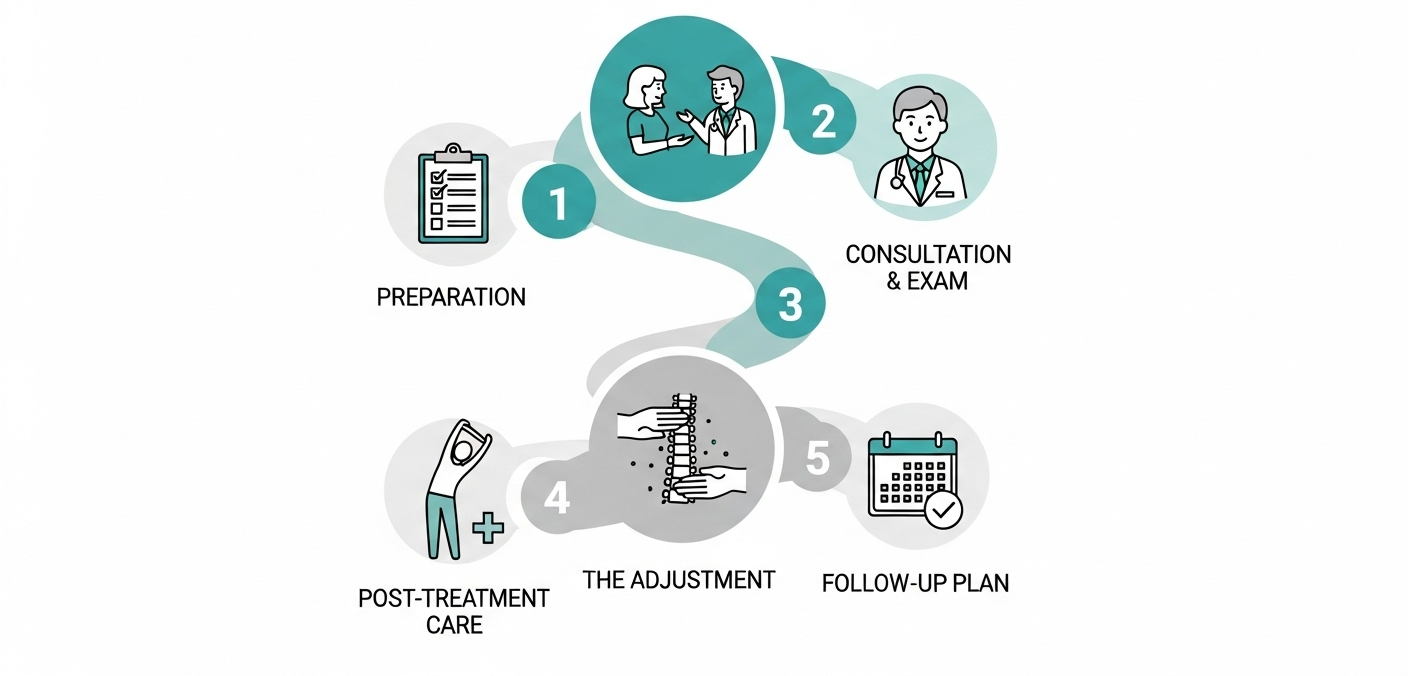
Your first chiropractic visit follows a clear, structured path from preparation to follow-up care.
We will break down the entire experience into manageable, easy-to-understand stages. We'll cover how to prepare for your visit, what happens during the initial consultation and comprehensive examination, and the details of the chiropractic adjustment itself. Furthermore, we'll discuss post-treatment sensations and the importance of follow-up care in achieving long-term wellness. By the end of this guide, you will have a thorough understanding of the process, empowering you to take control of your health journey.
Preparing for Your First Chiropractic Appointment
Proper preparation can significantly enhance your first chiropractic experience, ensuring you and your chiropractor can focus on what matters most: your health. A few simple steps can streamline your appointment and help set the stage for a successful outcome.
What to Bring: Medical History, Symptoms, and Questions
Your initial appointment is a deep dive into your unique health profile. Be prepared to discuss your complete medical history, not just the primary symptoms that brought you in. Compile a list of past injuries, surgeries, chronic conditions, and any medications you are taking. Document your current symptoms in detail: when they started, what makes them better or worse, and how they impact your daily life. Finally, write down any questions you have. No question is too small when it comes to understanding your body and your care.
What to Wear: Comfort and Mobility are Key
Chiropractic examinations and treatments involve movement. To ensure your chiropractor can properly assess your body's function, it's best to wear comfortable, non-restrictive clothing. Athletic wear, leggings, or loose-fitting pants and tops are ideal choices. Avoid stiff fabrics like denim, dresses, or skirts that might limit your mobility or make it difficult to lie comfortably on the adjustment table. The key is to allow for a full range of motion.
Setting Your Expectations: What Chiropractic Care Aims to Achieve for Your Health
While many people first seek chiropractic care for pain relief—especially given that around 39% of American adults recently experienced back pain—its scope is much broader. Chiropractic care aims to restore and optimize the function of your body, particularly the relationship between your spine and nervous system. The goal is not just to alleviate symptoms but to address the root cause, improve joint mobility, enhance nervous system function, and empower your body to heal itself. This is a partnership focused on improving your overall health and resilience.
The Initial Consultation: Your Story, Our Starting Point
The cornerstone of effective chiropractic care is a thorough understanding of you as an individual. This begins with the initial consultation, an in-depth conversation where your chiropractor listens carefully to your health story.
Sharing Your Health History: More Than Just Back Pain
Your chiropractor needs a complete picture of your health to provide safe and effective treatments. This conversation will cover your personal and family medical history, lifestyle factors like diet and exercise, stress levels, and occupational demands. Seemingly unrelated details can provide crucial clues about the underlying cause of your symptoms. This comprehensive history helps the chiropractor understand how your body has reached its current state and informs every step of your examination and subsequent care.
Your Health Goals: What Do You Hope to Achieve with Chiropractic Care?
Beyond understanding your pain and symptoms, your chiropractor wants to know your goals. Do you want to play with your grandchildren without pain? Improve your athletic performance? Sleep through the night? Or simply maintain your health and prevent future problems? Clearly defining your goals helps tailor the treatment plan to your specific needs and aspirations. This collaborative approach ensures your care is aligned with what you want to achieve for your life and well-being.
The Comprehensive Chiropractic Examination: Uncovering the Root Cause of Your Symptoms
Following the consultation, your chiropractor will perform a detailed physical examination. This hands-on assessment is designed to identify the source of your issues by evaluating the structure and function of your musculoskeletal system.
The Chiropractor as a Health Detective: Understanding Your Body's Function
Think of your chiropractor as a detective looking for clues. They use a variety of tests and observations to understand how your body is functioning—or dysfunctioning. The focus is on identifying areas of restricted movement, muscular imbalance, and nerve irritation, which are often the root cause of pain and other symptoms. This examination is a critical step in developing an accurate diagnosis.
Posture Assessment and Spinal Check: Visualizing Your Body's Alignment
Your posture provides a window into your spinal health. The chiropractor will visually assess your posture from multiple angles, looking for asymmetries, unleveling of the shoulders or hips, and abnormal spinal curvatures. They will then use palpation—a method of feeling with their hands—to evaluate the alignment and movement of each segment of your spine and other joints. This helps pinpoint specific areas that may require adjustments.
Range of Motion Tests: Assessing Your Mobility and Joint Function
You will be asked to perform a series of simple movements and stretches to assess the range of motion in your spine and other joints. These tests measure your flexibility and identify areas of stiffness or restriction. Limited range of motion is a common indicator that joints are not moving correctly, which can lead to pain and accelerated wear and tear over time. Restoring this function is a primary goal of chiropractic care.
Neurological and Orthopedic Examinations: Evaluating Nerves and Musculoskeletal System Health
To get a complete picture, your chiropractor will conduct specific neurological and orthopedic tests. These may include checking your reflexes, muscle strength, and sensation to evaluate the health of your nervous system. Orthopedic tests help rule out other conditions and isolate the specific tissues—such as muscles, ligaments, or joints—that are causing your symptoms. This thorough process ensures your diagnosis is precise.
Diagnostic Studies (If Needed): When X-rays or MRIs are Recommended
In some cases, a visual look inside the body is necessary. If your history or examination suggests a more serious issue, such as a possible fracture, significant degeneration, or a disc injury, your chiropractor may refer you for diagnostic imaging like X-rays or an MRI. These studies can confirm a diagnosis and help create the safest, most effective treatment plan for your specific condition.
Understanding Your Chiropractic Analysis and Personalized Treatment Plan
After gathering all the necessary information from your history and examination, your chiropractor will synthesize the findings into a clear diagnosis and a customized plan of action.
Reviewing Your Findings: A Clear Explanation of Your Assessment Results
Your chiropractor will take the time to explain their findings in an easy-to-understand manner. They will show you what they discovered during the examination, connect it directly to your symptoms and health goals, and explain the diagnosis. This is an opportunity for you to ask questions and gain a deep understanding of your body and the source of your health concerns.
Developing Your Chiropractic Treatment Plan: A Roadmap to Recovery and Wellness
Based on your diagnosis, your chiropractor will propose a personalized treatment plan. This roadmap will outline the recommended types of treatments, the frequency of your appointments, and the expected timeline for improvement. The plan is tailored to you and often includes more than just adjustments; it may involve therapeutic exercises, lifestyle advice, or other supportive therapies. Your active participation in this plan is key to achieving the best possible results.
Your First Chiropractic Adjustment: What to Expect in the Treatment Room
With a clear diagnosis and plan in place, it’s time for your first chiropractic adjustment. This is the core therapeutic procedure that chiropractors use to restore proper function to your joints and nervous system.
Getting Comfortable on the Adjustment Table
You will be asked to lie on a specially designed chiropractic table. These tables are often padded and may have sections that can be raised or lowered to position your body for the most effective and comfortable adjustment. Your chiropractor will guide you into the correct position and ensure you feel relaxed and supported before beginning any treatment.
Explaining the Techniques: Tailored to Your Body and Needs
There is no one-size-fits-all approach to chiropractic adjustments. Your chiropractor will use specific techniques best suited to your body, condition, and comfort level. This may include the traditional high-velocity, low-amplitude (HVLA) thrust, which is a quick, gentle force, or it may involve lower-force techniques using specialized instruments or sections of the table that drop away. They will explain what they are about to do before each adjustment.
The "Popping" Sound: What It Is and Why It Happens (Gas Release from Joints)
Many patients hear a "popping" or "cracking" sound during an adjustment. This sound, called cavitation, is perfectly normal and is not the sound of bones cracking. It is simply the release of a gas bubble from the fluid within the joint, similar to cracking your knuckles. The sound is a byproduct of the adjustment, not the goal, and its presence or absence has no bearing on the effectiveness of the treatment.
The Sensation of an Adjustment: Often Gentle, Rarely Painful
A properly administered chiropractic adjustment should not be painful. You may feel pressure, a stretching sensation, or a quick movement. Many patients experience an immediate sense of relief and increased mobility. Your chiropractor is highly trained to deliver adjustments with precision and care, always working within your comfort range. Open communication is essential; always let them know if you experience any discomfort.
Immediately After Your Adjustment: What to Feel and Do
Your body will begin to adapt to the changes immediately following your first adjustment. Understanding the common responses and knowing how to support the healing process can maximize the benefits of your care.
Common Post-Adjustment Sensations: Soreness, Fatigue, or Relief
Responses to a first adjustment vary. Many people feel immediate pain relief, a feeling of lightness, and an improved range of motion. It is also common to experience mild soreness or stiffness, similar to how you might feel after starting a new exercise routine. This is a normal response as your body adjusts to its new alignment. Some people feel a bit tired, while others report a surge of energy.
Post-Treatment Self-Care: Maximizing Your Benefits
Your chiropractor will provide specific instructions to follow after your appointment. This advice commonly includes drinking plenty of water to help flush toxins and hydrate your tissues, applying ice to any sore areas for 15-20 minutes, and avoiding strenuous activities for the rest of the day. Gentle walking or light stretching may also be recommended to help your body integrate the changes.
Beyond the First Adjustment: The Path to Lasting Wellness
Your first chiropractic adjustment is the beginning of a process. Just as one workout doesn't make you fit, one adjustment is often the first step on a path toward lasting health improvements and resilience.
The Importance of Follow-Up Appointments and Consistent Care
Consistent care is crucial for achieving long-term results. Follow-up appointments allow your chiropractor to build on the progress of the previous visit, reinforce proper joint function, and help your body create new, healthier patterns. Studies show that patients with chronic low-back pain who receive chiropractic care report high rates of success, with nearly 73.2% describing outcomes as very to extremely successful. Regular treatments help retrain your body, manage chronic issues, and, most importantly, prevent future problems from developing, solidifying the long-term value of your care.
Conclusion
Your first chiropractic adjustment is a proactive and empowering step toward better health. By understanding what to expect—from the initial consultation and thorough examination to the adjustment itself and post-treatment care—you can approach your appointment with confidence. The process is a collaborative partnership designed to uncover the root cause of your symptoms, restore your body's natural function, and create a personalized roadmap to your health goals. Remember that chiropractic care is not just about alleviating immediate pain; it is an investment in your long-term wellness, aimed at improving mobility, optimizing nervous system function, and preventing future injuries. By following through with your recommended care plan and communicating openly with your chiropractor, you are setting the stage for a healthier, more resilient future.
Ready to Feel Your Best? Book Your Appointment Today!
Whether you're dealing with back pain, neck discomfort, or seeking preventative care, LJ Chiropractic Clinic is here to help. Our experienced team, led by Li Jen, offers personalized chiropractic treatments tailored to your unique needs. Serving Caringbah, Kensington, and surrounding suburbs, we specialize in musculoskeletal conditions, sports injuries, and more.
Don't wait to start your journey towards better health and wellbeing. Schedule your appointment online now or call us at:
Caringbah: (02) 9525 4303
Kensington: (02) 9188 8484
Your path to a healthier, pain-free life begins here!
